
Almond Shelling Machine | Industrial Almond Sheller
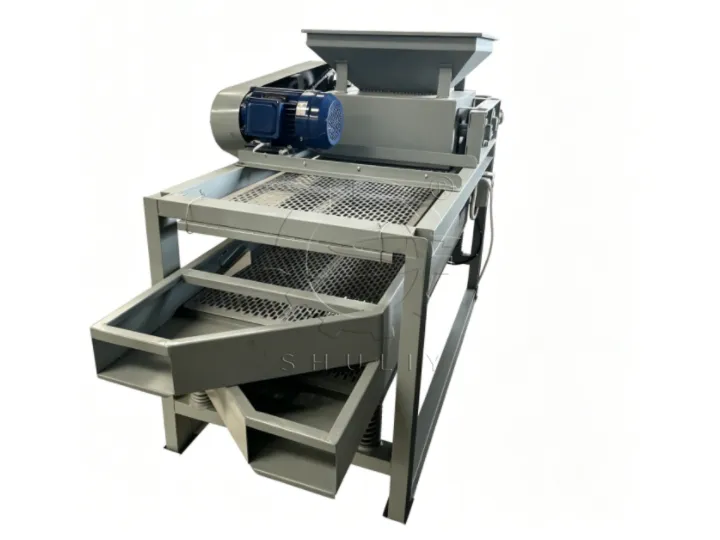
Removing the hard outer shell is one of the key steps in almond processing. Manual shell cracking can be slow and difficult to maintain at a consistent rate, especially when processing larger quantities of almonds. A mechanical almond shelling machine provides a more efficient way to crack almond shells and prepare the kernels for separation and further processing.
Shuliy’s almond shelling machine is a single-stage shelling unit with a rated capacity of 400 kg/h. It can be used independently or integrated into a complete almond processing line. When a higher production capacity is required, multiple machines can be installed in parallel, with the number of almond shelling machines determined according to the target output and the capacity of the connected equipment.
What Is an Almond Shelling Machine?
An almond shelling machine is designed to crack the hard shell surrounding an almond kernel. During processing, mechanical force breaks the shell so that the kernel can be released and separated from the shell fragments.
It is important to distinguish almond shelling from almond peeling. Shelling removes the hard outer shell, while peeling removes the thin brown skin from the almond kernel after shelling.
A typical almond processing process may include:
Raw almonds → Size grading → Almond shelling → Shell-kernel separation → Kernel grading → Further processing
The actual process depends on the raw material and the required final product. A customer who only needs shelled almond kernels may only need the shelling and separation stages, while a customer producing peeled kernels will need additional soaking and peeling equipment.
400 kg/h Almond Shelling Machine Specifications
| Item | Especificação |
|---|---|
| Machine type | Single-stage almond shelling machine |
| Capacidade | 400 kg/h |
| Potência do motor | 2,2 kW |
| Tensão | 380 V |
| Dimensions | 1.9 × 0.78 × 1.2 m |
| Peso | 280 kg |
| Main material | Carbon steel |
With a capacity of 400 kg/h, this almond sheller can serve as an individual processing machine or as one shelling unit within a larger system. The machine measures 1.9 × 0.78 × 1.2 m, making it convenient to arrange within a processing workshop.
The actual shelling performance can vary with almond variety, shell hardness, kernel size, raw material condition, feeding consistency, and machine adjustment. For this reason, equipment selection should be based on the customer’s actual almonds and production requirements rather than capacity alone.
How Does the Almond Shelling Machine Work?
The almond shelling machine uses mechanical force to crack the hard almond shells and release the kernels.
1. Raw almond feeding
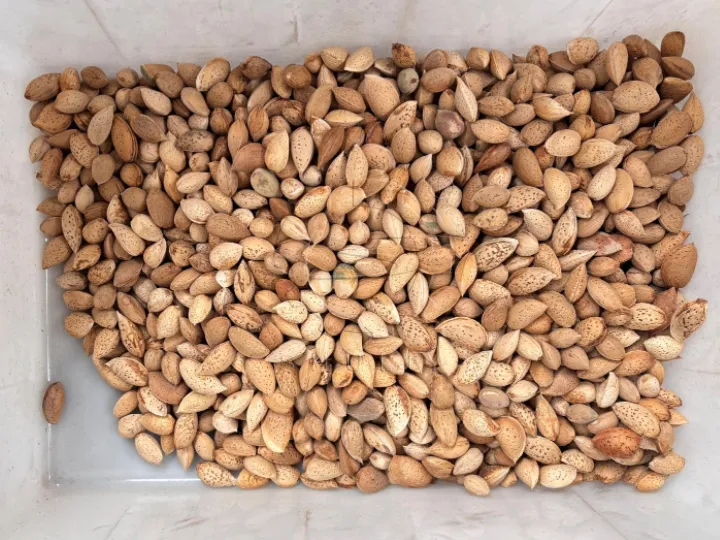
Unshelled almonds are loaded into the hopper at the top of the machine. Stable and relatively uniform feeding helps maintain consistent processing conditions.
2. Shell cracking
The almonds enter the shelling section, where mechanical force is applied to crack the hard outer shells.
The shelling conditions need to be adjusted according to the characteristics of the raw almonds. Almonds may differ in size and shell hardness, so a suitable adjustment is important for achieving effective shell removal while limiting unnecessary kernel damage.
3. Screening
After shell cracking, the processed material moves through the screening section.
The mixture may contain almond kernels, shell pieces, incompletely shelled almonds, and smaller particles. The built-in screening section helps perform preliminary classification.
For applications requiring cleaner separation, a dedicated almond shell and kernel separator can be installed after the shelling machine.
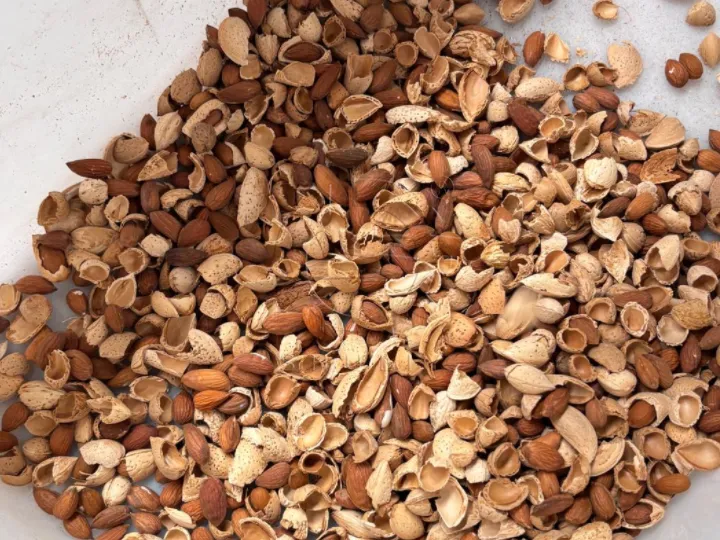
What Can Affect Almond Shelling Performance?
The capacity shown in the specifications is an important reference, but the actual performance of an almond shelling machine depends on the raw material and operating conditions.
Almond size
Different almond sizes may require different shelling adjustments. If the raw almonds vary significantly in size, grading them before shelling can make the following process more consistent.
Shell hardness
The hardness and condition of the almond shell affect how much mechanical force is required to crack it. Different almond varieties may therefore require different machine settings.
Raw material condition
Moisture and general raw material condition can also affect the shelling process. Customers should provide information about their almonds when discussing equipment configuration.
Feeding consistency
An uneven or excessive feed rate can affect processing stability. In an automated line, the feeding system should therefore be matched with the capacity of the almond shelling machine.
Machine adjustment
The shelling section needs to be adjusted according to the actual almond characteristics. Proper adjustment is important because the goal is not simply to break the shells, but to achieve effective shelling while maintaining the desired kernel quality.
For these reasons, the 400 kg/h figure should be regarded as the rated capacity of the machine rather than a guaranteed output under every raw material condition.
Multiple Almond Shelling Machines for Higher Production
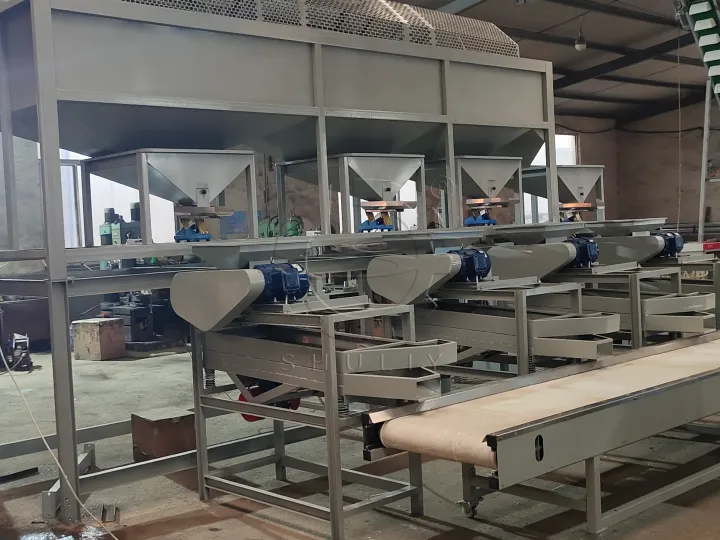
One almond shelling machine has a rated capacity of 400 kg/h, but a complete almond processing line is not limited to the capacity of a single unit.
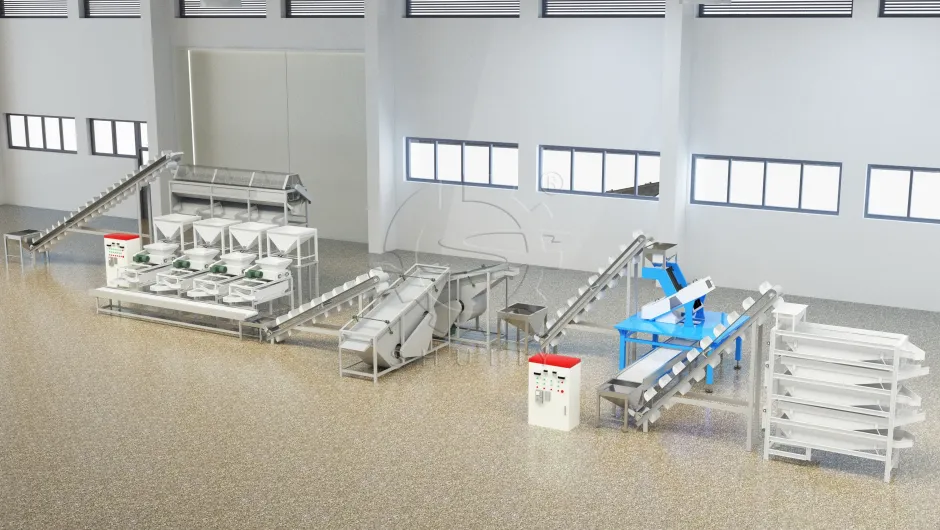
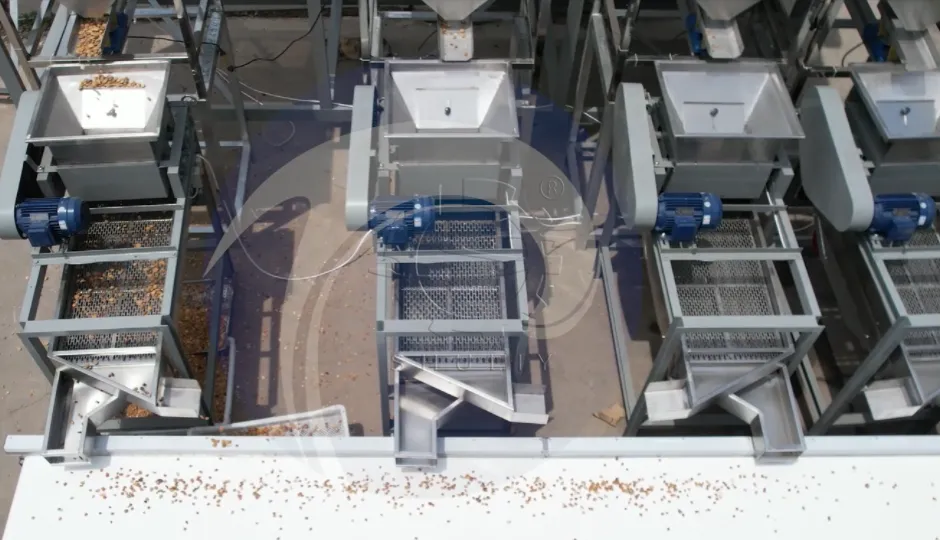
When a customer requires a higher shelling capacity, multiple machines can be installed in parallel. The number of machines can be determined according to the required production capacity and the capacity of the upstream and downstream equipment.
Based on the rated capacity of one unit:
| Number of shelling machines | Combined rated capacity |
|---|---|
| 1 | 400 kg/h |
| 2 | 800 kg/h |
| 3 | 1,200 kg/h |
| 4 | 1,600 kg/h |
These are theoretical combined capacities calculated from 400 kg/h per machine. The actual capacity of a complete production line also depends on feeding, grading, shell-kernel separation, conveying, raw material characteristics, and other operating conditions.
This modular arrangement gives almond processors greater flexibility. For example, a project can initially use one almond shelling machine and add additional units when the required production capacity increases.
For larger commercial projects, the number of shelling machines should therefore be determined during the overall line design rather than assuming that one machine must serve the entire production capacity.
Why Is Almond Grading Important Before Shelling?
Raw almonds are not always uniform in size. When almonds with substantially different sizes enter the same shelling section, the required shelling conditions may also differ.
For a standalone almond sheller, the operator can adjust the machine according to the raw material.
For a larger automated almond processing line, a grading machine can be installed before the shelling section. The almonds are first classified by size and then processed under more suitable shelling conditions.
A complete processing system may therefore use:
Almond grading → Almond shelling → Shell-kernel separation → Kernel grading
This arrangement allows the different processing stages to work together rather than relying on the shelling machine alone.
Standalone Almond Sheller or Complete Processing Line?
The right configuration depends on what the customer wants to produce and how much raw material needs to be processed.
A standalone almond shelling machine may be suitable when:
- The main requirement is removing hard almond shells
- The customer already has grading or separation equipment
- Subsequent sorting will be handled separately
- The required shelling capacity can be handled by one machine
- The customer wants to start with the shelling stage and expand later
A complete almond processing line may be preferable when:
- Continuous processing is required
- Almonds need to be graded before shelling
- Automatic shell-kernel separation is required
- Shelled kernels need further grading
- The total production capacity is higher than one shelling unit
- Several almond shelling machines need to operate together
- The final product requires additional processing such as peeling
Depending on the project, a complete line can include an almond grader, feeding system, almond shelling machine, shell-kernel separator, kernel grader, soaking equipment, almond peeling machine, drying equipment, and packaging equipment.
Not every customer needs all of these machines. The line should be configured according to the actual production process.
Almond Shelling Machine for Sale
If you are looking for an almond shelling machine for sale, this 400 kg/h single-stage model can be used as an independent almond sheller or integrated into a larger almond processing system.
The number of machines does not have to be fixed simply according to the model. If the required production capacity is higher, several almond shelling machines can be installed in parallel. The final number should be determined according to the target output, raw almond characteristics, and the capacity of the complete processing line.
Shuliy can provide an individual almond shelling machine or help configure a complete almond processing solution based on your project requirements.
To recommend a suitable configuration, please provide:
- Required processing capacity
- Almond size or raw material information
- Local power voltage
- Standalone machine or complete processing line
- Desired finished product, such as shelled or peeled almond kernels
With this information, we can determine whether one almond shelling machine is sufficient or whether multiple shelling units and additional processing equipment should be included in the project.